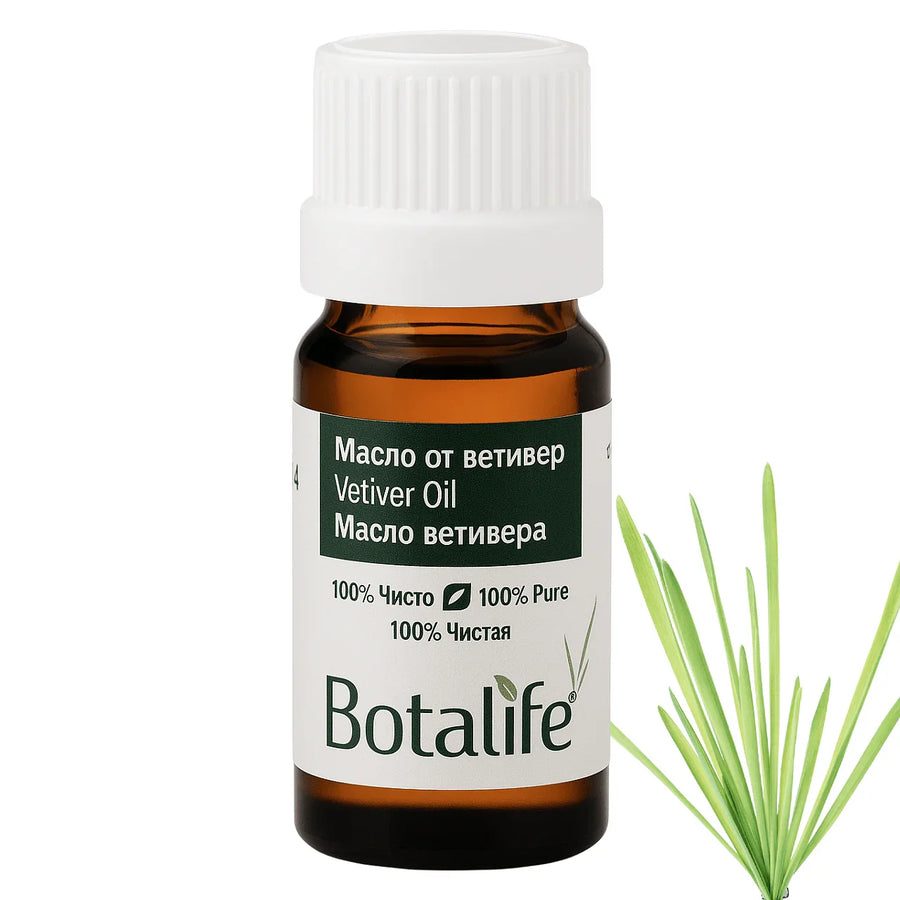
Vetiver essential oil, 5 ml
18.90 €
18.90 €
100% pure vetiver essential oil
/Vetiveria zizanoides/
Produced by steam distillation.
Internally for adults: 1 drop a day, always diluted in coconut oil or honey.
Externally: for massage, skin masks, aroma pads, baths, vaginal douches, aroma lamp.
Caution! This product is not a medicine! It should not be used as a substitute for a varied and balanced diet! Do not exceed the recommended daily dose! Not to be used by pregnant or breastfeeding women!
If taken together with medicinal products, consult a pharmacist!
*The effects, methods of use and dosages cited in Botalife's articles and in the leaflets enclosed with each product apply only to Botalife-branded products, for which Botalife guarantees the concentration, purity, quality and origin of the oils.
Antiseptic, antispasmodic, depurative, warming, sedative (nervous system), stimulating (circulation, production of red blood cells), vermifuge, cicatrising, moisturising, pain-relieving and anti-allergic action; an aphrodisiac and repellent; regulates the hormonal system.
It is used for irritability, anger, hysteria, neurotic behaviour and insomnia, as well as for physical and emotional exhaustion, PMS, acne and muscle and joint pain
Main benefits of using vetiver oil:
1. Benefits for the skin: Vetiver essential oil strengthens, firms and protects the skin from environmental influences, thus showing anti-ageing properties. Its regenerative properties help wounds heal and fade scars, stretch marks and acne marks.
Massage with the oil boosts circulation, improves metabolism and digestion, and relieves muscle and joint pain.
2. Managing ADHD (attention deficit hyperactivity disorder): In one study, Dr Terry Friedmann examined the effectiveness of essential oils in children aged six to fourteen diagnosed with ADHD. Lavender, vetiver and cedarwood oils were used, and the children were divided into three groups accordingly. In this study, parents were asked to help their children inhale the oil from the bottle three times a day for 30 days. The results showed that vetiver essential oil improved brain activity and reduced symptoms in people diagnosed with ADHD.
In addition, Dr Friedmann received letters from the parents of the children taking part in the study saying that the children's behaviour at home had improved. In several cases they also said that teachers at school had noticed an improvement too.
3. Improves bodily functions: Vetiver oil supports the immune and nervous systems, as it is a natural tonic. A 2015 in vivo study conducted in India found that vetiver oil plays a protective role in the body by reducing the toxic effects of a chemotherapy drug called cisplatin, which is used to treat testicular, bladder, ovarian or lung cancer. Because of its antioxidant activity, vetiver oil significantly inhibited DNA damage, the clastogenic effect and cell cycle arrest in the bone marrow cells of mice given cisplatin for five consecutive days.
The calming and restorative qualities of vetiver oil are also responsible for stimulating the immune system and supporting the nervous system. When we are under stress, adrenaline and cortisol flood the body; our blood pressure, breathing and heart rate increase. Glucose is then released into the blood for ready energy. Digestion, growth, reproduction and immune function are suppressed or held back when we feel tense and anxious, and blood flow to the skin is reduced while pain tolerance increases.
Relieving stress affects the brain, heart, digestion, immune system and every other system in the body, so natural remedies for anxiety, such as vetiver oil, can be extremely helpful.
4. Repellent action: Vetiver oil is one of the essential oils that can be used successfully against ticks. It can be used topically on the skin and also to treat surfaces directly where ticks may be present.
In a study published in the medical journal Journal of Vector Ecology, researchers compared several essential oils with picaridin-based chemical repellents known to kill mosquitoes. They found that vetiver was more effective than any of the chemical repellents at repelling mosquitoes. It repelled more than 95 per cent of a specific type of mosquito, significantly more than the other products tested.
Some people use vetiver oil to fight lice, as it is non-toxic and acts as an insecticide and repellent.
In India it is traditionally used as a remedy against moths and bedbugs.
Vetiver oil is also used to repel termites.
5. Perfume: Vetiver oil has long been an ingredient in many commercial perfumes, and the reason for this is its wonderful grounding aroma, which combines beautifully with other oils such as ylang-ylang, lavender, patchouli, rose, orange (and all citrus oils), sage, juniper and sandalwood.
You can make your own perfume by mixing 10 drops of lavender oil, 8 drops of lemon oil and 6 drops of vetiver oil in a 10 ml bottle filled with jojoba, apricot or another neutral-smelling plant oil.
Certificate No.: TR-32-К-003617
Packaging: glass bottle with dropper, 5 ml
Storage: in a dark, cool place, out of the reach of children, with the cap tightly closed
Best before: see packaging
Manufacturer: Manolya Dogal ve Aromatik, Turkey
Exclusive importer for Bulgaria: Botalife Bulgaria Ltd.
Add 5 drops of vetiver oil to 1 litre of water.
Add 30 drops of vetiver oil to 50 ml of carrier oil.
Add 15 drops of vetiver oil to 50 ml of a carrier oil suited to your skin type.
Add 5–10 drops of vetiver oil to your bath water. Because it is both aromatic and cooling, using it in the bath prevents overheating and helps with relaxation and insomnia. To increase the calming effect, combine vetiver oil with lavender and rose essential oils.
Essential oil conversion table, calculator and professional tips
4 ways to use essential oils safely internally, with recipes
Diffuser blends for restful sleep
The effects and uses of essential oils on the human body
How to use essential oils at home
TOP 4 antibacterial essential oils
Vetiver is a perennial plant – a tall grass with long, thin, stiff leaves, purplish-brown flowers and roots that reach 4 metres deep – grown in India, Indonesia, Haiti, China, Japan and elsewhere. The name “vetiver” comes from the Tamil “vetiverr”, meaning “hatched” – a description of the way the roots are harvested.
Vetiver oil is obtained from its roots by steam distillation. The resulting oil is amber, brown or dark golden in colour, with a syrupy consistency; its aroma is rich and intense, made up of grassy, woody, earthy, balsamic, amber and sweet notes.
Because of its grounding, sensual and deeply calming aroma, vetiver oil is often called the “oil of tranquillity” and the “scent of the soil”.