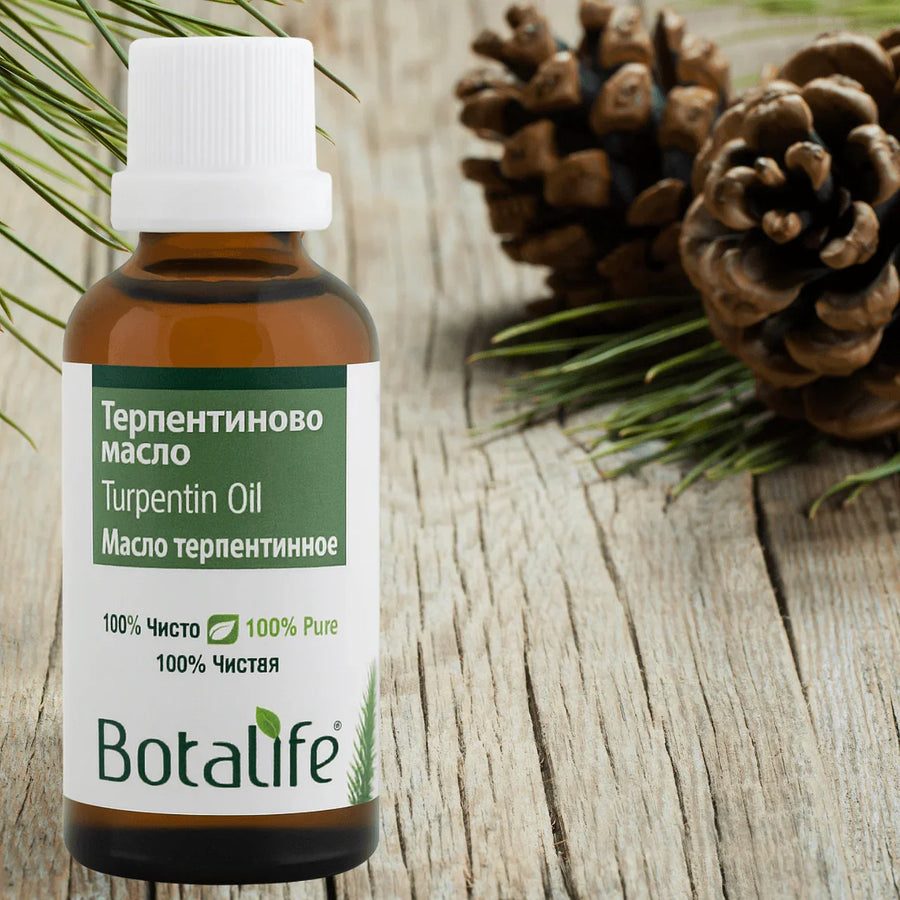
Turpentine essential oil, 50 ml
12.80 €
12.80 €
100% pure turpentine essential oil /Turpentine oil/
Produced by steam distillation.
Externally: inhalation, vaginal douches, balms, bath emulsions.
A few drops of the oil are usually rubbed into the desired area. Preparations with turpentine oil are usually made in concentrations of 10–50%.
Turpentine vapours are often inhaled by doing inhalations with a few drops of oil in hot water.
Safety:
Turpentine oil is considered safe when inhaled and when applied to the skin appropriately. Avoid using the oil undiluted or on large areas of skin.
Using turpentine oil by mouth for medicinal purposes is considered potentially dangerous: 2 ml/kg is considered poisonous, while 120–180 ml can be fatal for adults.
Adverse effects associated with oral use of turpentine oil include:
Insomnia
Headache
Vomiting
Cough
Haematuria
Inflammation of the urinary tract
Albuminuria
Coma
Death
When inhaled, turpentine oil may cause mild inflammation of the airways. Turpentine oil may worsen the symptoms of bronchial spasms in people with whooping cough or asthma. Topically, turpentine oil may cause contact allergies, skin irritation and hypersensitivity. Poisoning can occur if turpentine oil is used extensively on the skin, which in turn can damage the central nervous system and kidneys.
Caution! This product is not a medicine. It should not be used as a substitute for a varied and balanced diet. Do not exceed the recommended daily dose.
If taken together with medicinal products, consult a pharmacist!
*The effects, methods of use and dosages cited in Botalife's articles and in the leaflets enclosed with each product apply only to Botalife-branded products, for which Botalife guarantees the concentration, purity, quality and origin of the oils.
1. Turpentine oil is used as a flavouring agent in food. It is widely used in the production of varnishes and paints, and as an ingredient in cosmetics and perfumery or in insecticides. In folk medicine it is used as an antiseptic, vermifuge, painkiller and antirheumatic. It is an antidote to phosphorus.
2. Turpentine oil is used mainly externally because of its revulsive, antispasmodic and antiseptic action – it is used for rheumatism, neuralgia, muscle pain, gout and more, in the form of ointments, balms and plasters.
3. An effective remedy against lice, bedbugs, ticks, skin and intestinal parasites, stubborn constipation and bleeding.
4. For respiratory infections – rhinitis, sinusitis, coughs, bronchitis and tuberculosis – compresses and inhalations can be made, which have an antiseptic effect and ease expectoration.
5. Urinary tract infections – discharge, cystitis, urethritis, uterine bleeding, puerperal fever.
Certificate No.: TR-32-К-003617
Packaging: glass bottle with dropper, 50 ml
Storage: in a dark, cool place, out of the reach of children, with the cap tightly closed
Best before: see packaging
Manufacturer: Manolya Dogal ve Aromatik, Turkey
Exclusive importer for Bulgaria: Botalife Bulgaria Ltd.
Turpentine oil has deep roots in medical history. In “Looking for Longleaf: The Fall and Rise of an American Forest”, the author Lawrence Earley writes that the Romans used it to treat depression, naval surgeons in the Age of Sail (16th–18th centuries) injected it into wounds, and physicians used it to stop heavy bleeding, as an internal antiparasitic, and for intestinal colic, migraine, vaginal discharge, scabies, gallstones, gangrene and more. Doctors were drawn to it even though they were aware of its less desirable effects. Today internal use of turpentine oil is not recommended because of possible side effects – damage to the kidneys and mucous membranes, convulsions in acute poisoning and headaches.
Turpentine oil is obtained from crude turpentine (oleoresin) by steam distillation. Turpentine is obtained from the bark of various species of terebinth and pine trees. In the past it was extracted from the terebinth tree, from which it gets its name. Crude turpentine is a mixture of resinous and volatile substances with a semi-solid consistency. Its distillation yields turpentine oil – a colourless, mobile, slightly yellowish liquid with a distinctive balsamic aroma and a pungent taste. It consists of terpenes – mainly the monoterpenes alpha- and beta-pinene, as well as camphene, carene, limonene and others.