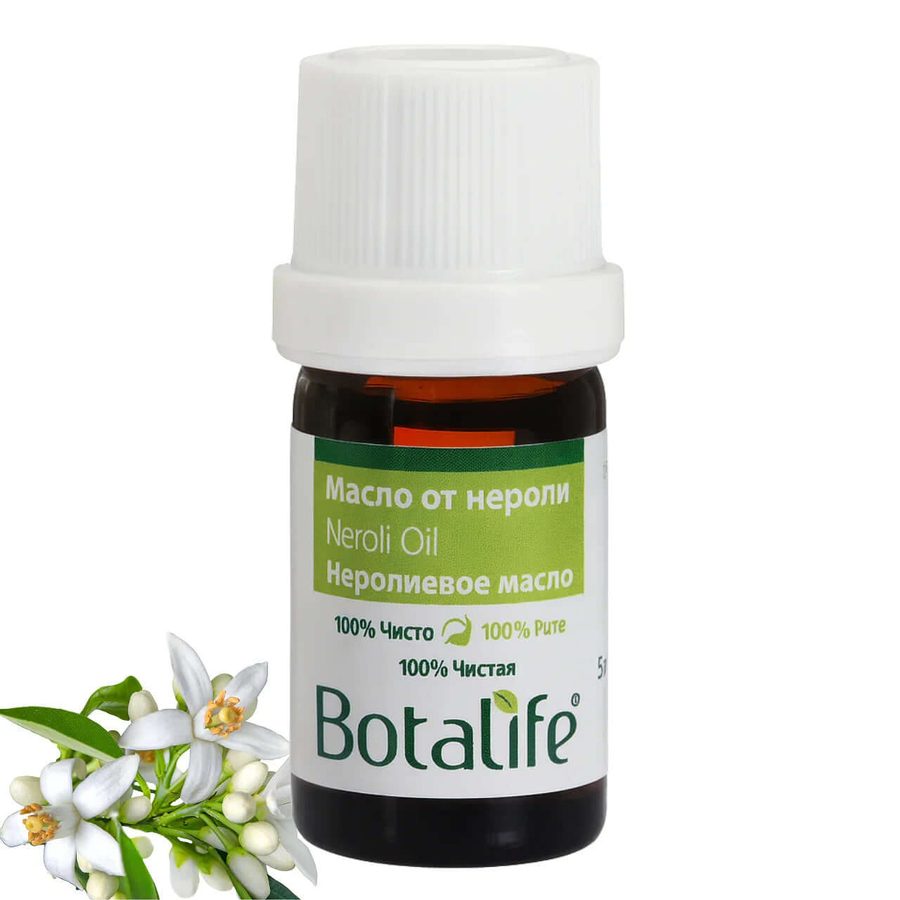
Neroli essential oil, 5 ml
55.95 €
55.95 €
100% pure neroli essential oil /Citrus Aurantium Flower Oil/
Produced by steam distillation.
Internally: 1–2 drops a day, mixed with 1 tsp of coconut oil or honey and dissolved in 1/2 cup of warm water.
Externally: for massage, baths, inhalation, sauna, diffuser, as an addition to cosmetics.
Caution! This product is not a medicine! It should not be used as a substitute for a varied and balanced diet! Do not exceed the recommended daily dose!
If taken together with medicinal products, consult a pharmacist!
*The effects, methods of use and dosages cited in Botalife's articles and in the leaflets enclosed with each product apply only to Botalife-branded products, for which Botalife guarantees the concentration, purity, quality and origin of the oils.
1. Reduces stress and relieves menopausal symptoms: The effects of inhaling neroli essential oil on menopausal symptoms, stress and oestrogen in postmenopausal women were examined in a 2014 Korea University School of Nursing study. Sixty-three healthy postmenopausal women inhaled 0.1% or 0.5% neroli oil or almond oil (control group) for five minutes twice a day for five days. Compared with the control group, the two groups that inhaled neroli oil showed significantly lower diastolic blood pressure, as well as improvements in pulse rate, serum cortisol levels and oestrogen concentrations. The study shows that inhaling neroli essential oil helps relieve menopausal symptoms, increase sexual desire and lower blood pressure in postmenopausal women.
2. Reduces inflammation and pain: Neroli oil has been shown to be an effective therapeutic choice for pain and inflammation. The results of a study in the Journal of Natural Medicines suggest that neroli oil has biologically active compounds that can further reduce acute and chronic inflammation. Neroli essential oil has also been found to be able to reduce central and peripheral sensitivity to pain.
3. Digestive disorders: Because of its antispasmodic and carminative properties, neroli oil can be used successfully to relieve conditions such as colic, diarrhoea and dyspepsia of neurogenic origin. Use 1–2 drops internally, or massage a few drops diluted in a carrier oil into the lower abdomen.
4. Shows antimicrobial activity: The antimicrobial activity of neroli oil was demonstrated against six types of bacteria, two types of yeast and three different types of fungi in a study published in the Pakistan Journal of Biological Sciences. Neroli oil showed marked antibacterial activity, especially against Pseudomonas aeruginosa. Neroli essential oil also showed very strong antifungal activity compared with a standard antibiotic (nystatin).
5. Acts as an anti-seizure and anticonvulsant agent: Seizures involve changes in the brain's electrical activity. The symptoms of a severe seizure are often widely recognised, including violent shaking and loss of control. A recent 2014 study was designed to examine the anticonvulsant effect of neroli oil. The study found that neroli oil has biologically active compounds with anticonvulsant activity, which supports its use in managing seizures.
6. Repairs and rejuvenates the skin: If you are looking for essential oils to add to your daily skincare, neroli oil definitely deserves your attention. It is known for its ability to regenerate skin cells and improve skin elasticity. It also helps maintain the right balance of sebum in the skin, which makes it an excellent choice for all skin types.
Because of its ability to revitalise the skin at cellular level, neroli essential oil can be used against wrinkles, scars and stretch marks. Any skin condition caused by or related to stress would also respond well. It may also be useful for treating bacterial skin conditions and rashes, as it has an antimicrobial action.
Certificate No.: TR-32-К-003617
Packaging: glass bottle with dropper, 5 ml
Storage: in a dark, cool place, out of the reach of children, with the cap tightly closed
Best before: see packaging
Manufacturer: Manolya Dogal ve Aromatik, Turkey
Exclusive importer for Bulgaria: Botalife Bulgaria Ltd.
Essential oil conversion table, calculator and professional tips
The most suitable essential and plant oils for high blood pressure
4 ways to use essential oils safely internally, with recipes
The effects and uses of essential oils on the human body
How to use essential oils at home
The bitter orange – Citrus aurantium – is a cross between pomelo and mandarin. It originates in South-East Asia but is now grown throughout the Mediterranean region and in many other places with a subtropical climate. This remarkable tree is known for producing three different essential oils. The peel of the almost ripe fruit gives bitter orange oil, the leaves are the source of petitgrain essential oil and, last but not least, neroli essential oil is extracted from the tree's small, white, waxy flowers by steam distillation. About 1 tonne of hand-picked flowers is needed to produce 1 litre of this precious oil. The aroma of the oil is lovely: warm, sweet, fresh and floral with slightly bitter notes.
Some of the main components of neroli oil include linalool, linalyl acetate, nerolidol, E-farnesol, α-terpineol and limonene.
Neroli oil is non-sensitising, non-toxic, non-phototoxic and non-irritating.
Neroli oil has an antidepressant, antiseptic, antispasmodic, bactericidal, carminative, cicatrising, deodorising, digestive and fungicidal action; it is an aphrodisiac, mildly hypnotic and a tonic for the cardiovascular system.
Neroli oil blends well with the following essential oils: chamomile, sage, coriander, frankincense, geranium, ginger, grapefruit, jasmine, juniper, lavender, lemon, mandarin, myrrh, orange, palmarosa, petitgrain, rose, sandalwood and ylang-ylang.