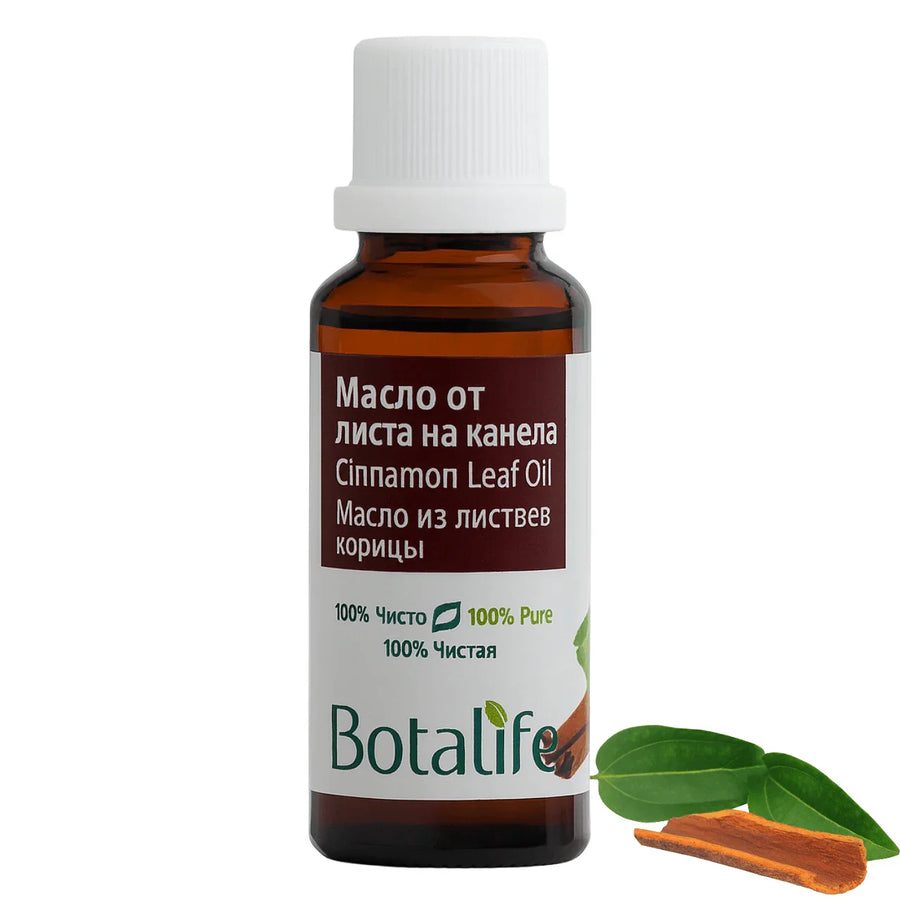
Cinnamon leaf essential oil, 10 ml
10.95 €
10.95 €
100% pure cinnamon leaf essential oil
/Cinnamomum zeylanicum/
Produced by steam distillation.
Internally: 2–3 drops a day on 1 tsp of honey, dissolved in a glass of warm water.
Externally: aromatherapy, massage, gargling, compresses, inhalation. Cinnamon leaf oil is extremely strong and must be diluted with a carrier oil at a ratio of 1:5 when used.
Contraindications:Avoid during pregnancy, as it has an emmenagogue action (induces menstruation). Any detoxification during pregnancy and breastfeeding is not recommended, because the toxins released can pass through the placenta and breast milk to the baby. Not to be taken internally by young children!
Cinnamon leaf oil should be used with caution, as the eugenol and cinnamaldehyde it contains can inflame the mucous membranes. High doses of cinnamon leaf oil can irritate the mouth and tongue and cause ulcers and convulsions. It can lead to dizziness, vomiting, diarrhoea, and inflammation of the urinary tract, intestines and stomach lining.
Caution! This product is not a medicine! It should not be used as a substitute for a varied and balanced diet! Do not exceed the recommended daily dose!
If taken together with medicinal products, consult a pharmacist!
*The effects, methods of use and dosages cited in Botalife's articles and in the leaflets enclosed with each product apply only to Botalife-branded products, for which Botalife guarantees the concentration, purity, quality and origin of the oils.
1. Eliminates stress:Cinnamon leaf oil improves the production of neurotransmitters such as serotonin and dopamine and relieves symptoms of anxiety, tension, nervousness and depression.
2. Improves cognitive function: Researchers at the University of California, Santa Barbara found that the cinnamaldehyde in cinnamon leaf oil protects the brain from damage by preventing the protein tangling often seen in Alzheimer's patients.
3. Relieves muscle spasms and rheumatic and arthritic pain:Cinnamon leaf oil has an antispasmodic and warming effect. It can be added to bath water to relieve the symptoms of arthritis and rheumatism.
4. Maintains healthy blood sugar levels: Cinnamon leaf oil has been shown to help improve the insulin response, thus lowering blood sugar levels and reducing the risk of developing type 2 diabetes. According to studies, cinnamon mimics the effects of insulin, which encourages cells to take up blood glucose for energy, removing it from the blood.
5. Supports heart health: Cinnamon leaf oil is full of antioxidants, including glutathione, which has been shown in animal studies to help strengthen the heart – but that is not the only heart benefit the oil can offer. Other studies have shown that cinnamon leaf oil helps lower cholesterol levels, which can keep blood pumping smoothly around the body by preventing plaque from building up on the walls of the blood vessels.
6. Relieves digestive problems: The eugenol in cinnamon leaf oil has a strong antibacterial action, fights harmful bacteria that cause infections in the gastrointestinal tract and supports digestion. It relieves gastritis, diarrhoea, heaviness in the stomach and vomiting.
7. Supports respiratory health: The antibacterial properties of cinnamon leaf essential oil can support respiratory health by maintaining a healthy immune system. Cinnamon leaf oil also helps control inflammation in the throat and lungs, making it easier for the body to expel mucus and relieving coughs and congestion.
8. Prevents infections: Cinnamon was once used as a food preservative before refrigeration, to prevent food from spoiling and bacteria from growing. In a study published in the International Journal of Food Microbiology, researchers found that the compounds in cinnamon leaf essential oil may help prevent E. coli outbreaks. As part of the study, the researchers found that cinnamon leaf essential oil prevented bacterial growth for at least two months when added to chilled carrot broth.
9. Repels insects: Studies show that the compounds in cinnamon leaf essential oil may prove useful for repelling a wide range of household pests, including black ants, mosquitoes, cockroaches and flies.
10. Aphrodisiac:Cinnamon leaf oil is used as an aphrodisiac in aromatherapy. Inhaled in combination with other essential oils, it can enhance sexual function in both men and women. It relieves symptoms of impotence in men.
11. Disinfectant:Cinnamon leaf oil works as a non-toxic natural disinfectant. It can disinfect toilets, bathrooms, kitchen furniture, door handles, microwaves, bread and meat chopping boards and more.
Certificate No.: TR-32-К-003617
Packaging: glass bottle with dropper, 10 ml
Storage: in a dark, cool place, out of the reach of children, with the cap tightly closed
Best before: see packaging
Manufacturer: Manolya Dogal ve Aromatik, Turkey
Exclusive importer for Bulgaria: Botalife Bulgaria Ltd.
TOP 12 essential oils for diarrhoea and how to use them
Essential oil conversion table, calculator and professional tips
TOP 10 essential oils for diabetes
Essential oils that repel insects
Essential oils to avoid during pregnancy and breastfeeding
4 ways to use essential oils safely internally, with recipes
The effects and uses of essential oils on the human body
How to use essential oils at home
TOP 4 antibacterial essential oils
Main uses of various Botalife essential oils – Part 1
How to make homemade lozenges for a sore throat and cough?
The vibrations of essential oils – Part 1
TOP 15 benefits of using cinnamon leaf oil
Immune-boosting blend with essential oils
How to strengthen the immune system with Botalife essential oils?
TOP 10 essential oils for inflamed tonsils (tonsillitis)
There are 100 varieties of cinnamon tree, but two types are used most for food and medicinal purposes – Ceylon cinnamon (Cinnamomum zeylanicum), found in India, Sri Lanka, Madagascar, the Caribbean and Brazil, and Chinese cinnamon (Cassia cinnamon or Cinnamomum aromaticum), which grows in China, Indonesia and Vietnam.
Cinnamon is one of the oldest spices known to man. It was highly prized in ancient Egypt – valued more than gold. It was used not only as a medicine and refreshing drink but also as an embalming agent. It is even mentioned in the Bible. The bark of the tree is used most as a food supplement and spice, but the leaves of the cinnamon tree also have many beneficial properties.
Cinnamon tree leaves are rich in phytonutrients, and essential oils are extracted from them. The leaves are steam-distilled, and the oil yield is about 1.6–1.8%. Cinnamon leaf oil has a musky, distinctive aroma. It has a yellow tint, unlike the reddish-brown oil from cinnamon bark. It contains 80% phenols, mainly eugenol, which determines the properties of the oil, as well as eugenol acetate, benzyl benzoate, cinnamaldehyde and cinnamic aldehyde. The phenols in cinnamon leaves give the oil its rejuvenating and health-giving qualities.
Cinnamon leaf oil has: antiseptic, analgesic, antispasmodic, antimicrobial, antioxidant, aphrodisiac, cardiac and other properties.